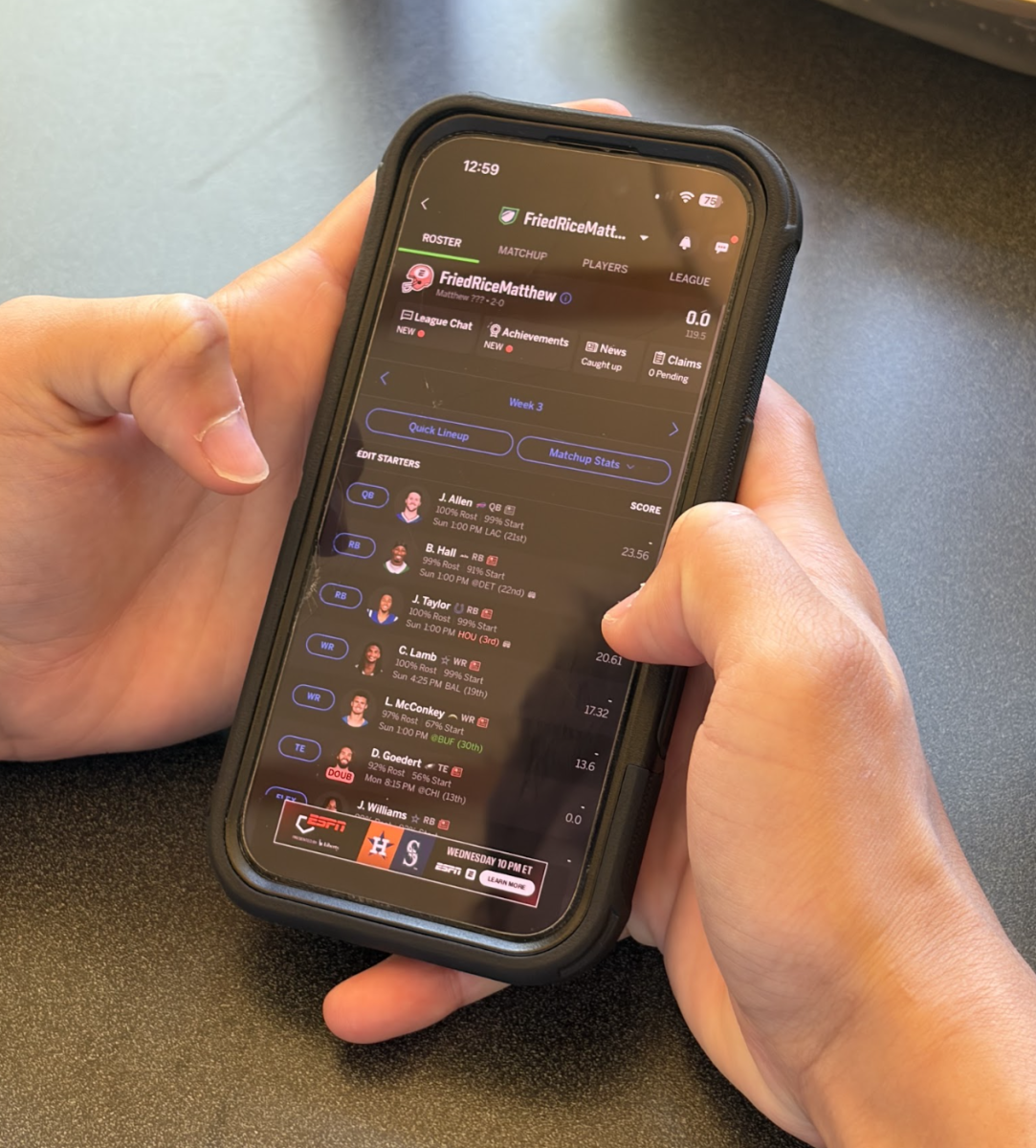









“I think [underage sports betting] is setting up an entire generation to have a gambling addiction,” says chemistry teacher Drew Kise. As sportsbook ads’ airtime increases and the amount of sportsbook companies exceeds previous years, sports betting rates are skyrocketing. In fact, half of the 18-49 male age group are said to have an account on an online sports betting site.
According to a 2026 survey from Common Sense Media, 36% of boys aged 11-17 have gambled, and of that, 12% participated in sports betting. This underage sports gambling problem has spiked in recent years. Since 2018, gambling disorder diagnoses have increased 60% in states that have legalized sports betting, with young men being the group experiencing the biggest shift, according to a 2026 study.
Large sportsbook apps such as Draftkings, Underdog and Kalshi have inserted their ads nearly everywhere, most prominently before, during and after sports games and sports talk shows. “Sports betting ads are everywhere—every single commercial break in a game has at least two sports betting ads,” says Khaled Delawalla ’29. By including celebrities that appeal to the youth, like Druski, Kevin Hart, Shaquille O’Neal, Timothee Chalamet and Sydney Sweeney, these ads have encouraged more young men to download these apps. Kalshi, in particular, has used ads made from AI, partly to grab kids’s attention and to keep them engaged.
Underage gambling stretches far beyond sports bets. Apps like Kalshi allow users to bet on almost anything, including the U.S. government confirming the existence of aliens and whether or not Costco will raise the price of their hot dogs. Because Kalshi has exploited a loophole involving federal regulations, anyone upwards of 18 years old can place bets on the site, making it legal for a student to gamble online as soon as their senior year of high school.