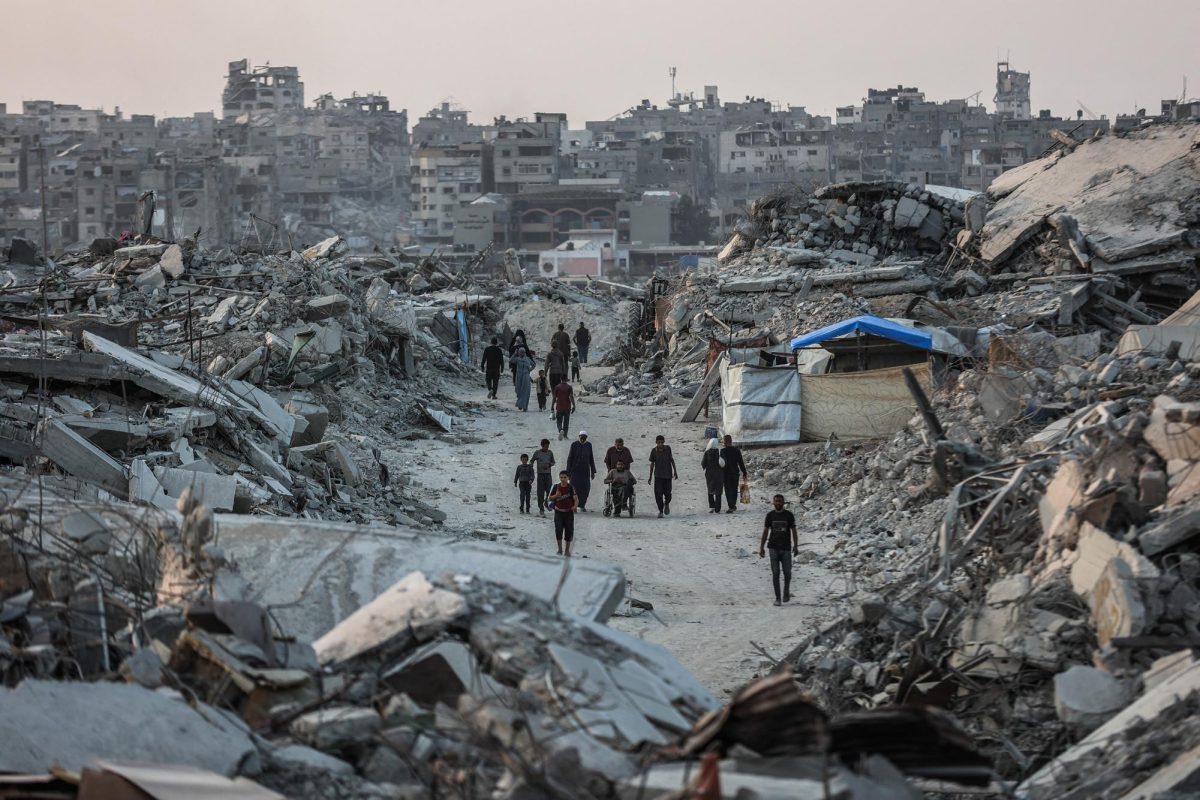
On Oct. 9, the Israeli Government officially accepted the ceasefire agreement created by Donald Trump, inspiring hope for those seeking an end to the ongoing war in the Middle East. This comes just over two years after the attacks of Oct. 7, 2023 that inflamed this longstanding conflict.
The ceasefire proposed by Trump includes three stages. Each stage lasts 42 days, but both sides have only officially agreed to the first. Currently ongoing, the first stage calls for the return of many Israeli hostages held in Gaza in exchange for the release of more Palestinian prisoners. This first stage also requires Israel to leave major cities in Gaza, allowing for more people to return to their homes. The ceasefire also requires Israel to allow more humanitarian aid, as many as 600 trucks every day, into the Gaza Strip.
The next two stages, while not yet guaranteed by either side, would consist of the complete release of all prisoners and all hostages on both sides, as well as the gradual de-escalation and ending of the war. This would also include discussions and negotiations of the disarmament of Hamas and the rebuilding of Gaza. This will also bring 200 U.S. troops to the area, in an attempt to stabilize it.
While President Trump has often repeated “War is over,” it still remains unclear whether this ceasefire will actually result in the ending of the conflict. There have been two other unsuccessful attempts at a ceasefire, one of which took place in January of this year.
The historical context and past failures of similar ceasefires leave many sceptical. “As a historian it’s hard for me to believe it will hold up based on the priorities and actions of Israel’s current government,” says history teacher John Terry.
This, coupled with reports that there are still Israeli airstrikes happening in Gaza, leaves many wondering how long lasting peace can be achieved in an area full of dissension and strife for over a century and whether or not this really means the end.